In a continuation of my exploration into the new E3/E5 features, this article (hopefully) covers Intune Advanced Analytics, and compares (at a high level!) its feature set and functionality versus the likes of Nexthink and ControlUp. Again, much like my last article, DEX was a big feature in a recent client event I attended, so it seems fitting to be writing this, at this particular moment in time. (Or maybe it’s just that everybody is simply discussing these new features being bundled into the Microsoft licensing? 🤔)
Digital Employee Experience (DEX) has been something that organisations, over the last few years, have become increasingly focused on . It’s no longer enough to know whether a device is compliant or whether Windows Update has installed successfully. The questions IT teams are now asking are much broader.
- Why are users complaining that their laptops are slow?
- Which applications are crashing most frequently?
- Why are boot times increasing?
- Which devices are becoming unreliable before the service desk is even aware of an issue?
- Can we measure the impact of our endpoint management strategy?
- Are we providing the right equipment for the right job?
These are exactly the types of questions that platforms such as Nexthink and ControlUp have been helping organisations answer for years. The last question on that list is important right now as DEX reporting plays very nicely into the procurement piece, with hardware availability still patchy, informed decisions about “device refresh” can be made with outputs from DEX platforms.
So, with Microsoft Intune Advanced Analytics now included in Microsoft 365 E3 and E5, Microsoft has firmly planted its feet on the ground in this area. The obvious question is whether it’s enough to replace a more mature/dedicated DEX platform. For many organisations, the answer may now be “perhaps.”
What is Intune Advanced Analytics?
Advanced Analytics builds upon the existing Endpoint Analytics capabilities within Microsoft Intune. Rather than simply reporting whether devices are healthy, it provides administrators with richer insights into how those devices are actually performing over time. Examples include:
- Boot and sign-in performance
- Application reliability
- Device responsiveness
- Resource utilisation
- Performance trends
- Hardware health indicators
- Device-level comparisons
- Organisational performance reporting
The aim is simple: identify deteriorating user experience before it generates service desk calls. Because it’s integrated directly into Intune, administrators don’t need to deploy another agent or learn another management platform. If you’re already using Intune, the analytics become part of the same operational workflow. I stress the “other agent” bit, as this is a common bugbear of folks — and agent-overload can impact user experience!
Comparing the competition
No two DEX platforms are identical, and each has evolved to solve slightly different challenges. I look at Nexthink, Lakeside SysTrack and ControlUp, again, from the point of view, that these are the platforms I have most experience with (although it’s been some time since I worked with SysTrack!). I appreciate the likes of Omnissa and other DEX platforms exist… although at a high level, they’re all setting out to do the same thing.
Nexthink
Nexthink is a leading Digital Employee Experience (DEX) platform that provides IT teams with deep visibility into the health, performance and user experience of endpoint devices. Rather than focusing solely on whether devices are online or compliant, Nexthink continuously measures how employees experience their technology, covering Windows and macOS devices, applications, networks and collaboration tools such as Microsoft 365 and Microsoft Teams.
Nexthink combines real-time endpoint telemetry, user sentiment and advanced analytics, Nexthink helps organisations proactively identify issues before they become service desk incidents, automates the remediation of common problems, and provides data-driven metrics that can improve productivity. The platform is widely used by enterprise IT departments to reduce support costs, accelerate troubleshooting, optimise software and hardware estates, and ensure employees receive a consistent, high-quality digital workplace experience.
Strengths
- Deep endpoint telemetry
- Excellent user experience scoring
- Rich dashboards
- Powerful root cause analysis
- Broad visibility across applications and services
- User sentiment surveys
- Workflow automation and remediation
Considerations
- Premium licensing
- Dedicated deployment and operational overhead
- Another management platform to maintain
For organisations wanting the most comprehensive understanding of endpoint experience, Nexthink remains one of the strongest products available.
ControlUp
ControlUp has traditionally been associated with virtual desktop environments but has expanded significantly into physical endpoint monitoring. It provides comprehensive visibility across Windows, macOS, virtual desktop infrastructure (VDI), applications, networks and collaboration services, allowing administrators to quickly identify and resolve issues affecting end users.
As with other solutions, ControlUp helps IT teams proactively detect performance bottlenecks, automate remediation of common issues, and reduce mean time to resolution (MTTR). The platform is particularly well known for its strength in monitoring virtual environments such as Citrix, VMware Horizon and Azure Virtual Desktop, while also providing extensive capabilities for modern managed endpoints.
Strengths
- Exceptional real-time performance monitoring
- Strong visibility across Windows 365, Azure Virtual Desktop and Citrix
- Automated remediation actions
- Excellent troubleshooting capabilities
- Mature reporting
Considerations
- Additional infrastructure and licensing
- Best suited to organisations requiring detailed operational visibility
- Separate management ecosystem
ControlUp continues to be particularly attractive for organisations running hybrid estates that include virtual desktops alongside traditional Windows endpoints.
Lakeside SysTrack
Another well-established player in the DEX market is Lakeside SysTrack. SysTrack is an advanced Digital Employee Experience (DEX) and endpoint monitoring platform. It uses intelligent edge agents to collect over 10,000 data points every 15 seconds across physical, virtual, and mobile devices, helping enterprise IT teams proactively resolve complex technical issues and prevent downtime
Strengths
- Extensive endpoint telemetry
- Detailed application dependency mapping
- User experience scoring
- Excellent migration readiness reporting
- Long history in enterprise environments
Considerations
- Premium pricing
- Greater implementation complexity
- Requires dedicated operational ownership
Large enterprises frequently use SysTrack during Windows migrations or workplace transformation programmes because of the depth of data it can collect.
Where Microsoft has the advantage
This is where things become interesting. Microsoft’s biggest advantage isn’t necessarily that its analytics are more capable than the competition. It’s that they’re already part of the platform many organisations use every day, so everything sits alongside eachother in a nice single Microsoft EcoSystem. There is:
- No additional endpoint agent to deploy
- No separate identity platform
- No connector between systems
- No duplicated device inventory
- No additional administration portal
That level of integration simplifies operations and provides a more consistent administrative experience. For organisations already committed to Microsoft’s management ecosystem, that’s a compelling proposition.
Where dedicated DEX platforms still lead
It’s important to be realistic. If your organisation already uses Nexthink, ControlUp or SysTrack, I don’t think Intune Advanced Analytics is an immediate replacement. Dedicated DEX platforms still provide capabilities that Microsoft either doesn’t offer or is only beginning to develop, including:
- Richer endpoint telemetry
- Near real-time monitoring
- End-user sentiment surveys
- Cross-platform visibility beyond Windows
- Advanced experience scoring
- Automated root cause analysis
- Sophisticated remediation workflows
- Executive-level DEX reporting
These products have spent years refining their platforms, and it shows. If your service desk relies on that level of insight to proactively manage tens of thousands of endpoints, the specialist tools continue to justify their investment – for now.
Who is Microsoft targeting?
Personally, I don’t think Microsoft is trying to displace the very top end of the DEX market. Instead, I believe it’s targeting organisations that currently have little or no endpoint analytics capability at all. Historically, many organisations have relied on reactive support.
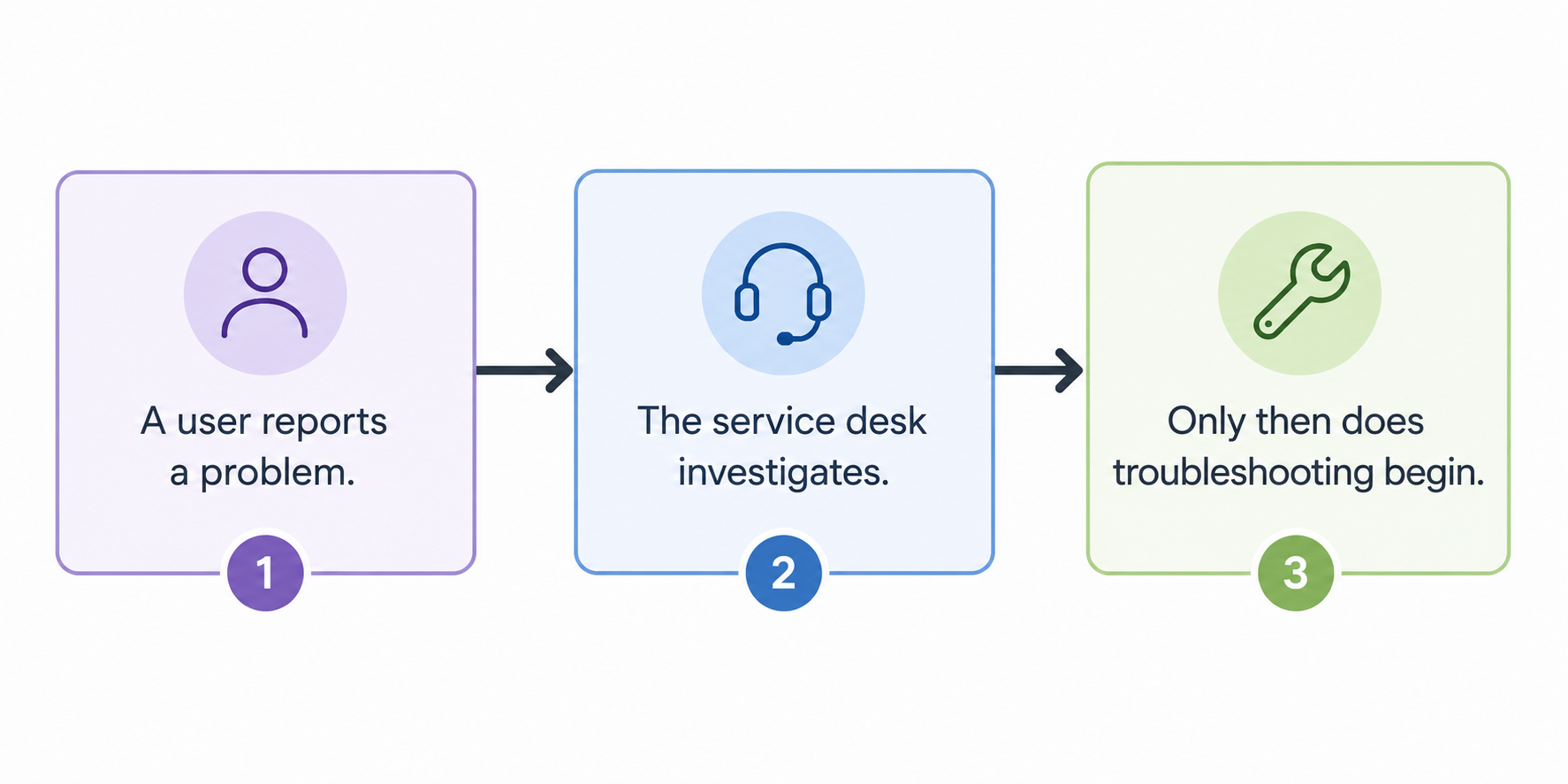
Advanced Analytics encourages a more proactive approach by highlighting trends before they become widespread issues. For many organisations, that’s a substantial improvement over having no meaningful analytics at all. I stress proactive, as everyone wants IT to be proactive, but it very rarely operates proactively in my experience. DEX can definitely help with that.
My thoughts
This feels like another example of Microsoft’s wider strategy. Rather than building a product that immediately surpasses established market leaders, Microsoft is raising the standard of what’s included within Microsoft 365. Will Intune Advanced Analytics replace Nexthink? For some organisations, probably not. But could it replace the need for a separate DEX platform in many small to medium-sized organisations, or in enterprises where the existing solution is only lightly used or perhaps DEX doesn’t yet exist?
I think the answer is increasingly yes.
If you’re already licensed for Microsoft 365 E3 or E5, Advanced Analytics is no longer something to overlook simply because it was once an optional extra. It’s included. That alone makes it worth evaluating before renewing another DEX platform contract. The endpoint management landscape is becoming increasingly consolidated around Microsoft 365. Advanced Analytics isn’t the final destination, but it is another significant step towards Microsoft offering a truly end-to-end endpoint management platform from provisioning and security through to user experience monitoring. The question is no longer whether Microsoft belongs in the DEX conversation. The question is how much further it can close the gap over the next few years.

Leave a Reply